
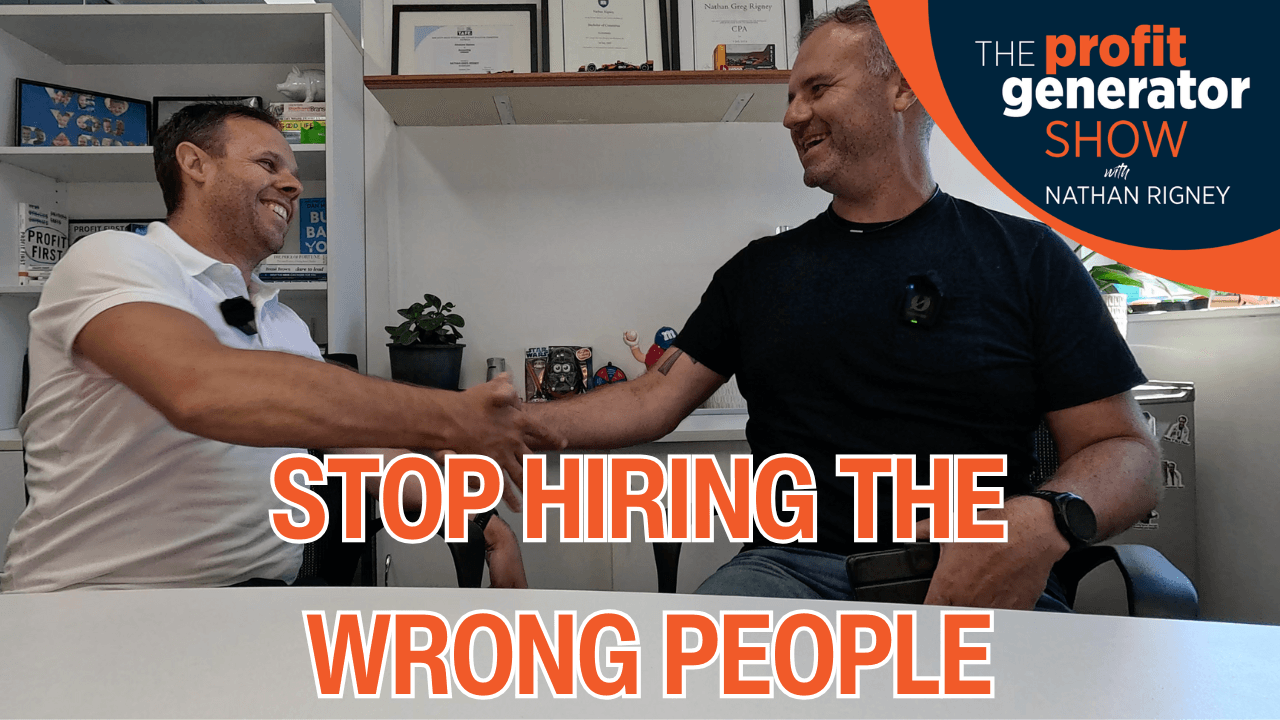
At the start of every new year, many business owners ask the same question:
“Is it time to hire?”
In this episode of the Profit Generator podcast, I sat down with Bill Corbett, Talent Acquisition Lead for Australia and New Zealand at Stanley Black & Decker, to unpack what business owners really need to think about before bringing on their next employee.
This wasn’t about recruitment buzzwords or fancy hiring trends. It was about getting the fundamentals right – and avoiding the costly mistakes that so many businesses make when they rush to hire.
Start With the Real Question: What Problem Are You Solving?
One of the biggest hiring mistakes is starting with a job title instead of a problem.
“I need an admin assistant” or “I need an accountant” isn’t enough.
Before you advertise a role or speak to a recruiter, you need clarity on:
- What is currently not getting done?
- What is taking up too much of your time?
- What outcome do you want this person to deliver?
Hiring without answering these questions often leads to:
- The wrong role
- The wrong expectations
- The wrong person – even if they’re technically “good”
A great hire solves a clear problem. A vague hire creates new ones.
Build the Role Around Reality, Not Wish Lists
Another common trap is designing a role that doesn’t match your budget or business size.
If your budget supports a $70k role, but your expectations match a $120k candidate, you’re setting yourself up for disappointment.
Be realistic about:
- Salary
- Experience
- Hours required (is it really full-time?)
- What skills are essential vs “nice to have”
A position description should exist for a reason – not just to tick boxes or copy another business’s ad.
Experience vs Potential: There’s No One Right Answer
Many business owners default to hiring younger, less experienced staff because they’re cheaper and “easier to train.”
That can work – but only if:
- You genuinely have time to train them
- You’re good at training and mentoring
- Your business can afford a slower ramp-up period
If you need results quickly, hiring experience often costs more upfront but delivers faster returns.
The key question isn’t age or years of experience. It’s:
Do you have the capacity to properly support this person?
Employees Are an Investment – Not a Social Club
A powerful reminder from this conversation was that employees are there to deliver outcomes.
They’re not there to:
- Keep you company
- Fill seats
- Be “nice to have”
Every hire needs a clear return on investment – whether that’s:
- Revenue generation
- Time freed up for the business owner
- Improved systems and client experience
If the role doesn’t clearly add value, it’s worth rethinking whether now is the right time to hire.
Don’t Overvalue Reference Checks
This one surprises a lot of people.
Reference checks often feel reassuring, but in reality, they’re highly subjective:
- Referees are usually friends or supportive managers
- People are reluctant to be honest
- Poor managers can give misleading feedback
Bill’s view is simple:
- Employment confirmation matters
- Qualification checks matter
- References should be factual, not opinion-based
Questions like “Would you re-employ them?” often tell you more than long, scripted reference forms.
When Does Using a Recruiter Actually Make Sense?
Recruitment fees can hurt – but so can vacant roles.
Using a recruiter or talent acquisition specialist can make sense when:
- The role is urgent
- The cost of leaving it vacant is high
- You don’t hire for this role often
- You don’t have the internal expertise or time
You’re not just paying for a candidate. You’re paying for:
- Market knowledge
- Networks
- Speed
- Risk reduction
The real question is not “How much does the recruiter cost?”
It’s “What is this role costing me by staying unfilled?”
Guarantees, Agencies, and Market Saturation
Guarantee periods sound comforting, but they’re not a magic fix.
If a hire doesn’t work out due to poor management, unclear expectations, or cultural misalignment, that’s rarely the recruiter’s fault.
Engaging multiple agencies can also backfire by:
- Saturating the market
- Confusing candidates
- Creating negative perceptions of your brand
Clear ownership, clear briefs, and clear accountability matter far more than guarantees.
Hiring Is Strategy, Not Admin
Hiring well isn’t about luck.
It’s about:
- Understanding your business
- Knowing your limitations
- Being honest about what you need
- Willingness to invest where it counts
As we head into 2026, the businesses that hire thoughtfully – not reactively – will be the ones that scale sustainably.
If you’re thinking about hiring this year and want help making sure the numbers, structure, and timing make sense, feel free to get in touch.